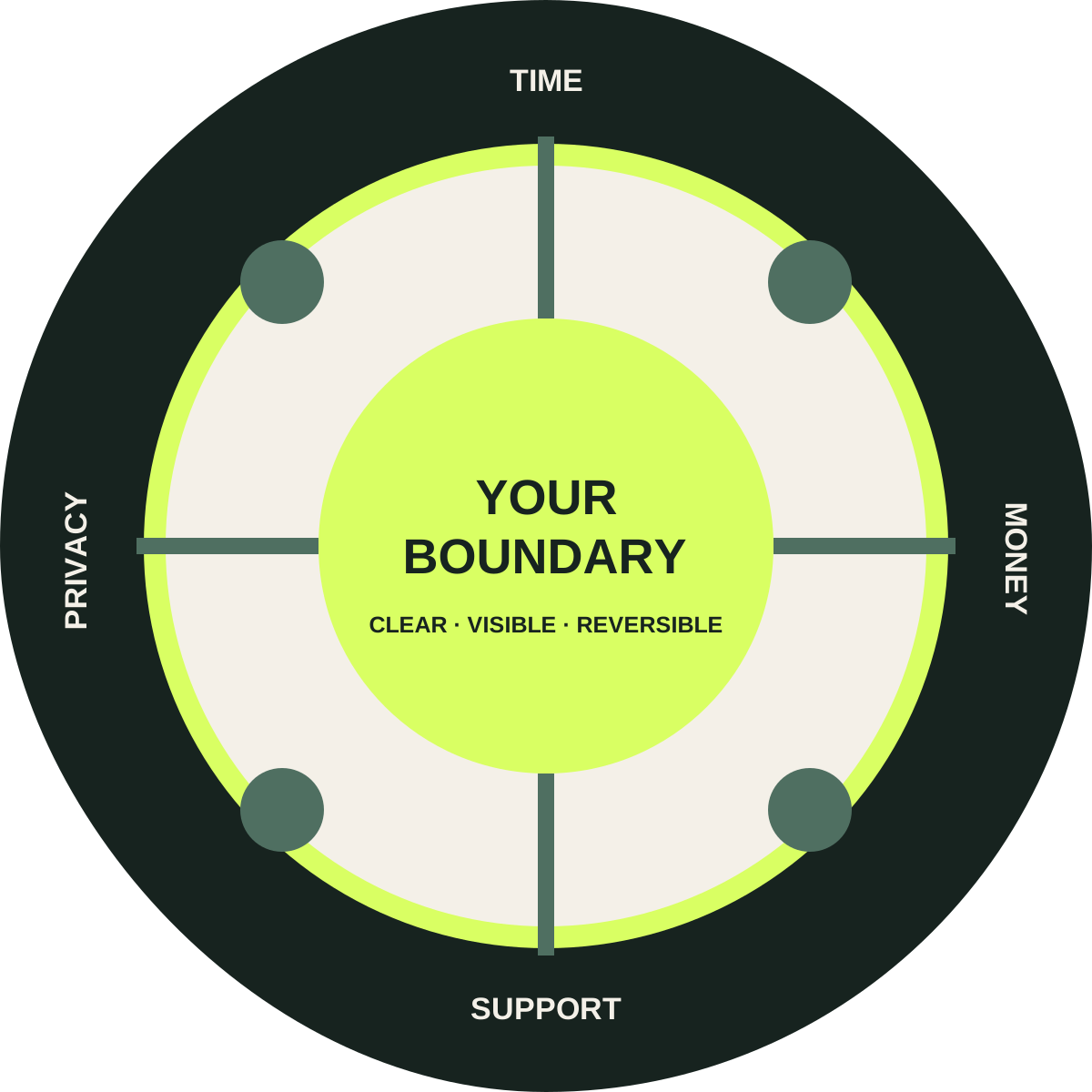
Write one sentence for each of those five areas before the first session.
Start with an observable trigger
The plan has no written limits for time, people, privacy, money or support. A trigger is useful because it can be noticed without guessing what the software “intends” or assigning a label to you. Write what happened, when it happened and which part of daily life changed. That record is more useful than a general feeling that use was good or bad.
Review the checklist weekly and change only one limit at a time. A single event may call for a small correction. A repeated pattern after a clear limit may call for a longer pause, account changes or an exit. Keep the response proportionate while protecting time, money, privacy and access to people.
What the available evidence can—and cannot—show
This page uses MIT Media Lab research summary on AI companions and mental health, U.S. Federal Trade Commission companion-chatbot inquiry for independent context. Those sources frame a decision; they do not predict every account or conversation.
Product screens, policies and prices can change. Check the current service before acting on a volatile detail. Independent research can identify associations, questions and population-level patterns; it cannot tell you exactly what one conversation means or guarantee an outcome.
Use vendor material for vendor-stated facts. Use independent research for broader context. Keep unknowns visible instead of filling them with assumptions.
A five-minute boundary worksheet
- Name the activity.Complete this sentence: “I use this service for…” Keep the purpose narrow enough to recognize when the session drifts.
- Write the line.Write one sentence for each of those five areas before the first session.
- Choose the trigger.The plan has no written limits for time, people, privacy, money or support.
- Plan the response.Pick one reversible first step: close the session, remove data, decline a charge, contact a person, review settings or cancel.
- Set a review date.Review what actually happened. Tighten the limit if it repeatedly failed; do not move it merely because the moment felt persuasive.
Keep the response proportionate
Pause and verify
Close the conversation, check the current policy or account control, and remove unnecessary personal details before continuing.
Return time to real life
Complete the displaced task, message a chosen person, go outside or return to sleep before deciding whether to reopen the app.
Leave when required
Stop when content involves minors, ambiguous age, non-consensual real-person material, coercion, urgent crisis needs or a charge you did not choose.
Escalate to people
Use qualified professional, emergency or legal support for matters that need it. Do not route urgent or high-stakes needs to a companion product.
Explore only after the boundary is written.
Candy AI is an adult AI companion service. We link to it as an independent publisher and may earn a commission. Check its current terms, privacy information, controls and prices against your own limits.
Explore Candy AI — sponsoredFrequently asked questions
Is this a diagnosis?
No. The check describes observable behavior and a practical choice. It does not diagnose a person or prove a health condition.
Can a policy guarantee safety?
No. A policy can explain stated rules and controls. It cannot guarantee every response, account event or future change.
What if the situation is urgent?
Contact local emergency or crisis services and a trusted person. An AI companion and this publication are not crisis care.
Sources used for this guide
Reviewed August 20, 2026. Links are provided so you can check the public material and its limits directly.