Name the limit
Choose the time, information, cost or behavior that stays outside the session.
Set clear limits for time, sleep, relationships, emotional disclosure, privacy and spending—before a compelling conversation makes the choice harder.
We may earn a commission from sponsored links. We are independent and not endorsed by the services discussed.
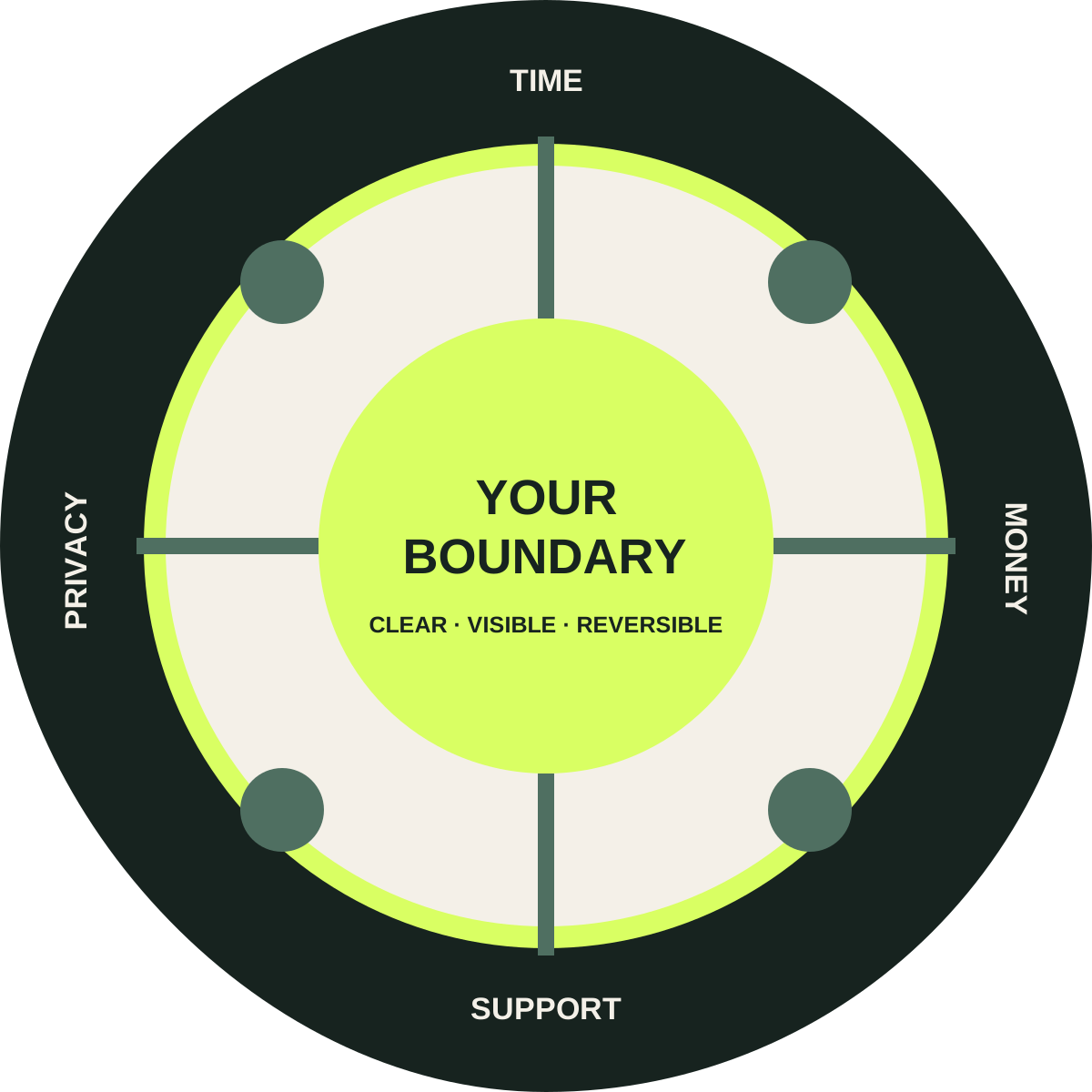
“Use less” is vague. “Stop at 10 p.m., spend no more than $20, keep names and health details out, and call a person when the situation is urgent” can be checked. Each guide turns one concern into a visible trigger and a proportionate next action.
Choose the time, information, cost or behavior that stays outside the session.
Use something observable: a missed plan, a renewal total, a late hour or a data request.
Pause, reduce exposure, contact a person, cancel, delete or leave while the choice remains yours.
Every page owns one narrow question, names its evidence limits and gives you a practical check. No diagnosis, invented account test or promise that a product is risk-free.
run a pre-use checklist for time, people, privacy, money and support boundaries.
Set this boundary →set a measurable daily or weekly AI companion time boundary.
Set this boundary →keep AI companion use from displacing sleep routines.
Set this boundary →use an AI companion without withdrawing from available human relationships.
Set this boundary →recognize observable signs that AI companion use is crowding out daily life.
Set this boundary →check repeated unwanted return-to-chat behavior without self-diagnosing addiction.
Set this boundary →maintain a clear distinction between generated responses and a human relationship.
Set this boundary →decide what emotionally sensitive information not to disclose to a companion app.
Set this boundary →set a privacy boundary before entering personal or intimate chat data.
Set this boundary →identify credentials, identity, finance, health, location and third-party data to keep out of chat.
Set this boundary →set consent boundaries for real-person voice, image and likeness use.
Set this boundary →understand why a companion must not replace crisis services or qualified care.
Set this boundary →apply an adults-only rule to intimate AI companion services.
Set this boundary →define topics and generated content that stay outside a user's companion experience.
Set this boundary →understand what current research does and does not establish about wellbeing.
Set this boundary →understand California companion-chatbot disclosures and safety duties without legal advice.
Set this boundary →set a cash spending ceiling before buying a subscription or credits.
Set this boundary →separate recurring subscription cost from variable credit spending.
Set this boundary →set subscription and credit limits before using Candy.ai paid features.
Set this boundary →reset prompts, routines and expectations when current use no longer fits personal boundaries.
Set this boundary →choose a time-limited break when boundary checks repeatedly fail.
Set this boundary →make an exit plan that covers subscription, account, data and human support.
Set this boundary →score an AI companion experience across agency, time, people, privacy, money and support.
Set this boundary →apply the boundary scorecard to Candy.ai without implying affiliation.
Set this boundary →review Candy.ai's stated privacy controls against a personal disclosure boundary.
Set this boundary →compare companion apps by user agency and boundary controls rather than feature count.
Set this boundary →Current research and professional analysis discuss attachment, use intensity, emotional connection and wellbeing. They support careful limits and continued access to people; they do not prove that every user benefits or is harmed. Read the underlying material from MIT Media Lab, the American Psychological Association and Frontiers in Psychology.
The five-part checklist covers time, people, privacy, money and human support in one page.